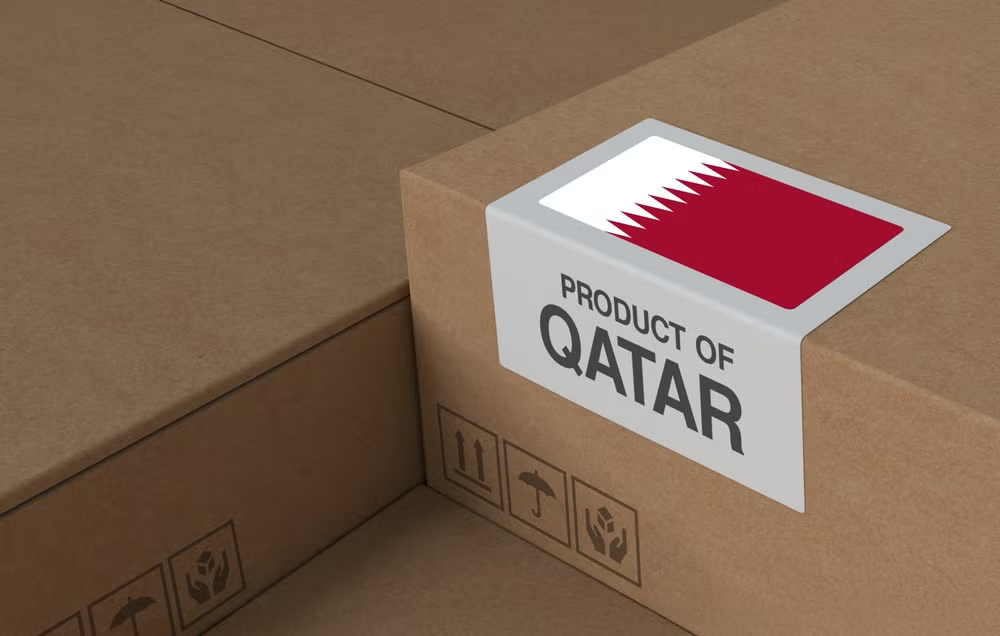
Luxury chocolates from Europe, premium skincare from Asia, and imported gourmet products all share the same expectation: they should always be available when customers need them. In Qatar’s premium FMCG market, maintaining that consistency is far more challenging than simply keeping warehouse shelves stocked.
Because much of the country’s premium FMCG inventory depends on international suppliers, every inventory decision affects replenishment speed, supplier coordination, and customer satisfaction. A delayed shipment or inaccurate inventory plan can quickly lead to stock shortages, excess inventory, or missed sales opportunities.
According to the International Trade Administration (ITA), Qatar imports a significant share of its food and consumer goods, making effective inventory management a critical capability for retailers and distributors. As supply chains become increasingly complex, AI inventory management is helping businesses improve inventory optimization, strengthen supply chain visibility, and make smarter operational decisions across the FMCG supply chain.
Table of Contents
ToggleInventory Management in Qatar’s Premium FMCG Ecosystem
Unlike many domestic retail markets, Qatar’s premium FMCG ecosystem relies heavily on imported products. Retailers and distributors frequently coordinate with suppliers across Europe, Asia, and neighboring GCC countries, creating longer procurement cycles and more complex inventory planning requirements.
At the same time, premium consumers expect consistent product availability regardless of seasonal fluctuations or global supply chain disruptions. Inventory management has therefore evolved beyond monitoring stock levels. It has become a strategic capability that directly influences customer satisfaction, operational efficiency, and long-term business resilience. Organizations that strengthen inventory planning and improve supply chain visibility are better positioned to maintain product availability while keeping inventory costs under control.
The Operational Reality Behind Premium FMCG Inventory
Managing premium FMCG inventory involves much more than balancing stock quantities. Businesses must coordinate procurement, warehousing, supplier communication, and replenishment planning while responding to changing market conditions. Every inventory decision influences how efficiently products move throughout the supply chain.
1. Longer Replenishment Cycles Require Better Planning
Premium FMCG products often travel across multiple countries before reaching retail shelves in Qatar. Longer procurement lead times reduce planning flexibility and increase the importance of accurate inventory management. AI-powered inventory planning enables businesses to anticipate replenishment requirements earlier, allowing procurement teams to make better purchasing decisions before inventory shortages begin to affect operations.
2. Maintaining Premium Product Availability Without Overstocking
Premium products typically carry higher inventory value than mass-market consumer goods. Overstocking increases storage costs and ties up working capital, while understocking can negatively affect customer satisfaction and brand loyalty. Inventory optimization supported by AI helps businesses maintain the right balance between product availability and operational efficiency without carrying unnecessary inventory.
3. Coordinating Multiple International Vendors
Premium FMCG retailers frequently collaborate with suppliers located across different countries. Managing replenishment schedules, shipment status, and inventory availability across multiple vendors can quickly become operationally complex. Better supply chain visibility enables procurement teams to coordinate vendor activities more effectively while improving decision-making across warehouse and logistics operations.
4. Preparing for Seasonal Demand Surges
Consumer purchasing patterns often shift during Ramadan, Eid celebrations, tourism peaks, and major international events hosted across the Gulf region. These seasonal changes place additional pressure on inventory planning and warehouse operations. Instead of relying solely on historical sales reports, AI inventory management enables organizations to anticipate changing demand patterns and prepare inventory more proactively.
How AI Inventory Management Creates Business Value
Traditional inventory management often relies on historical sales reports, manual planning, and periodic inventory reviews. While these methods remain valuable, they rarely provide the speed and visibility required for today’s premium FMCG operations.
AI inventory management combines operational data, inventory movement, supplier information, and purchasing trends to support faster and more informed inventory decisions. Rather than reacting after disruptions occur, businesses can identify potential risks earlier and improve planning across the supply chain.
| Operational Reality | AI Inventory Management Capability | Business Outcome |
| Imported inventory | Inventory planning | Better replenishment decisions |
| Premium SKU portfolio | Inventory optimization | Lower carrying costs |
| Multiple international vendors | Supply chain visibility | Faster supplier coordination |
| Seasonal demand fluctuations | Predictive inventory insights | Higher product availability |
According to McKinsey, AI-enabled supply chain planning can reduce forecasting errors by up to 50 percent while significantly lowering inventory-related costs. These improvements help businesses respond more quickly to operational changes while maintaining healthier inventory levels across the organization.
From Inventory Visibility to Vendor Agility
Vendor agility depends on more than responsive suppliers. It also requires businesses to access inventory insights quickly, share information efficiently across partners, and adjust replenishment decisions as market conditions evolve.
When inventory visibility improves, procurement teams can collaborate more effectively with suppliers, warehouses gain greater replenishment accuracy, and management teams receive stronger operational insights for strategic planning. This level of coordination allows businesses to respond faster to disruptions while improving operational consistency across the FMCG supply chain.
For organizations operating in Qatar’s premium FMCG market, stronger vendor collaboration creates a more resilient supply chain that supports both business continuity and customer satisfaction.
Business Benefits of AI Inventory Management
When inventory decisions are supported by AI-driven insights, organizations can move beyond reactive stock management and establish more resilient supply chain operations. These improvements extend beyond warehouse efficiency and contribute to stronger business performance across procurement, logistics, and retail operations.
Key business benefits include:
- Improved Inventory Optimization
Maintain healthier inventory levels while reducing unnecessary carrying costs. - Enhanced Supply Chain Visibility
Gain real-time insights into inventory movement across suppliers, warehouses, and retail operations. - More Effective Vendor Management
Strengthen collaboration between procurement teams and international suppliers through better inventory planning. - Smarter Inventory Planning
Prepare for seasonal demand changes and replenishment requirements with greater confidence. - Greater Operational Efficiency Across the FMCG Supply Chain
Improve coordination across procurement, warehousing, logistics, and retail operations.
According to PwC’s Global Consumer Insights Survey, product availability remains one of the most important factors influencing customer satisfaction. This makes inventory accuracy an increasingly valuable competitive advantage for premium FMCG businesses.
Turning Inventory Management Into a Competitive Advantage
For premium FMCG businesses in Qatar, inventory management has become a strategic capability rather than a routine operational function. Organizations that combine inventory optimization with AI-powered decision-making are better positioned to strengthen supplier collaboration, improve product availability, and respond more effectively to changing market conditions.
This shift is particularly important in import-driven markets, where inventory visibility and operational agility directly influence business performance. Investing in smarter inventory management today enables businesses to build more resilient supply chains while preparing for future growth opportunities.
Build Smarter Inventory Management Solutions with GITS.ID
Enterprise inventory management requires more than monitoring stock levels. Organizations need connected data, predictive insights, and intelligent decision-making that enable faster responses to operational changes while improving supply chain performance.
At GITS.ID, we help enterprises implement AI-powered inventory management solutions that combine predictive analytics, inventory optimization, and supply chain visibility into scalable digital ecosystems. By transforming operational data into actionable insights, businesses can improve efficiency, strengthen vendor collaboration, and build more agile supply chains that are ready for future growth.
Whether your organization is modernizing warehouse operations, improving inventory planning, or optimizing inventory across the FMCG supply chain, GITS.ID can help accelerate your digital transformation journey.